Manufacturing
How we make our yarn.
Reviewed by Mohamed Rizk, Head of Production Engineering, 20+ years at Al Rawda. Last updated
Experienced people, our own connected system, and a plant that keeps getting better. This is how a DTY cone is made in 10th of Ramadan City.
In numbers
What you can count on.
- tonnes always ready
- 60+
- We always hold more than 60 tonnes in stock, so orders can ship quickly.
- of orders shipped on time
- 90%
- Tracked in our own system, and we work to raise it.
- of lots checked on the floor
- 80%+
- By inspectors who check lots as they come off the machines.
- average experience of our inspectors
- 10 years
- And they pass it on to our newer workers.
- returns a month
- About 2
- That is how often we hear of a return. We look into every one.
- with most of our customers
- 15+ years
- Some have been with the family business since 1957.
Step by step
Nine steps from raw yarn to your cone.
Quick answer
DTY yarn is made by drawing and texturing partially oriented yarn (POY): it is heated, drawn and twisted, the texture is set, the filaments are air-tangled, and the yarn is wound onto cones.
The same steps apply to every DTY yarn. What changes between yarns is the denier, the filament count, the intermingling, the lustre and the colour.
Read what DTY is- 01
Raw material: partially oriented yarn
Every DTY yarn starts as partially oriented yarn, known as POY. We have worked with Korteks, a maker of the POY we texture, since 1998.
The quality of the POY sets the ceiling for the finished yarn.
- 02
Loading the machine
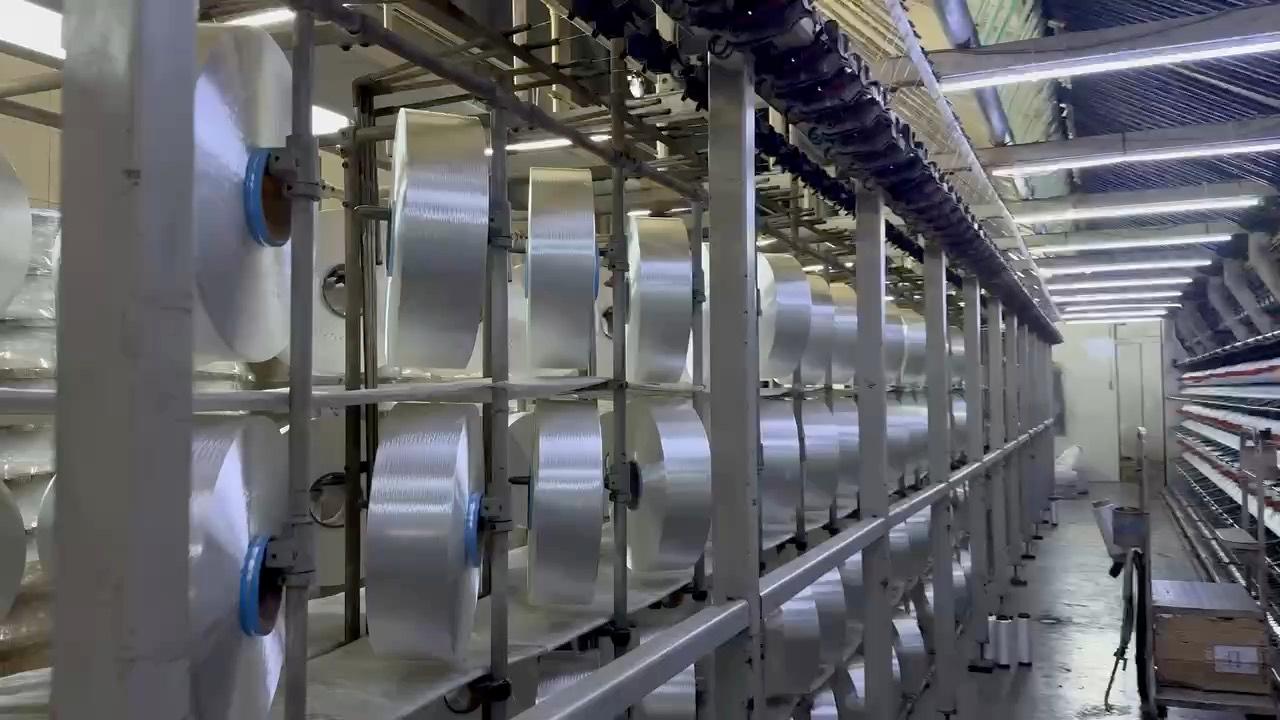
Packages of POY are loaded onto the texturizing machine, and each end of yarn is fed into its own position on the machine.
Every position makes one yarn, so the machine produces many at once.
- 03
Heating, drawing and twisting
The yarn passes through a heater and is drawn to its final strength and twisted at the same time. The heat sets the twist into the filaments.
Drawing gives the strength; the twist is what will become the texture.
- 04
Setting the texture
The yarn is cooled and untwisted. The filaments keep the crimps the twist gave them, and that is what makes DTY bulky, stretchy and soft.
This is the step that separates DTY from smooth, flat yarns.
- 05
Intermingling
A jet of compressed air tangles the filaments at points called nodes, which hold them together. How much air is used sets whether the yarn is NIM, SIM or HIM.
Nodes decide how the yarn behaves on your loom or knitting machine.
- 06
Winding onto cones
The finished yarn is wound onto cones, ready for the weaver or knitter.
Cones feed straight into your machines.
- 07
Inspected on the floor, lot by lot
Our quality inspectors work on the floor every day and check over 80% of lots as they come off the machines. They have done this for years, and they know the yarn by eye and by hand. They also pass what they know on to our newer workers.
A problem is caught at the machine, not at your loom.
- 08
Nothing is thrown away
Any waste yarn is kept, stored and sold for use elsewhere, so it is not thrown away.
Less waste, and a plant that respects what it makes.
- 09
Packing, storing and shipping
Cones are packed, stored and shipped to customers on time, in Egypt and abroad.
Our customers weave and knit to a schedule, so the yarn has to arrive on one.
One connected factory
The whole factory, in one system we built ourselves.
We did not buy software and adapt our work to it. We built our own, around how our factory runs, and we keep building it.
ERP
Running the business
Orders, stock, purchasing and finance, in one place.
MRP
Planning production
Materials, machines and downtime planned and tracked, so production runs steadily.
CRM
Knowing our customers
Every customer, quote and order connected to the yarn that was made for it.
Orders, quality, downtime and every small detail are connected, so everything can be monitored from one place.
For you, that means a smooth workflow and yarn that stays consistent from one lot to the next. For us, it means a factory that keeps improving, because we can see exactly where.
Always moving forward
Experienced people, modern tools, and a habit of improving.
Al Rawda has been a family business since 1957, and we have never stood still. Our people bring years of experience, and our own system helps us do better every month.
Experienced eyes
Inspectors who have checked yarn on our floor for years, every day.
One system
ERP, MRP and CRM built in-house, connecting the whole factory.
Less waste
Waste yarn is stored and sold on, not thrown away.
Our plant
Made in 10th of Ramadan City.
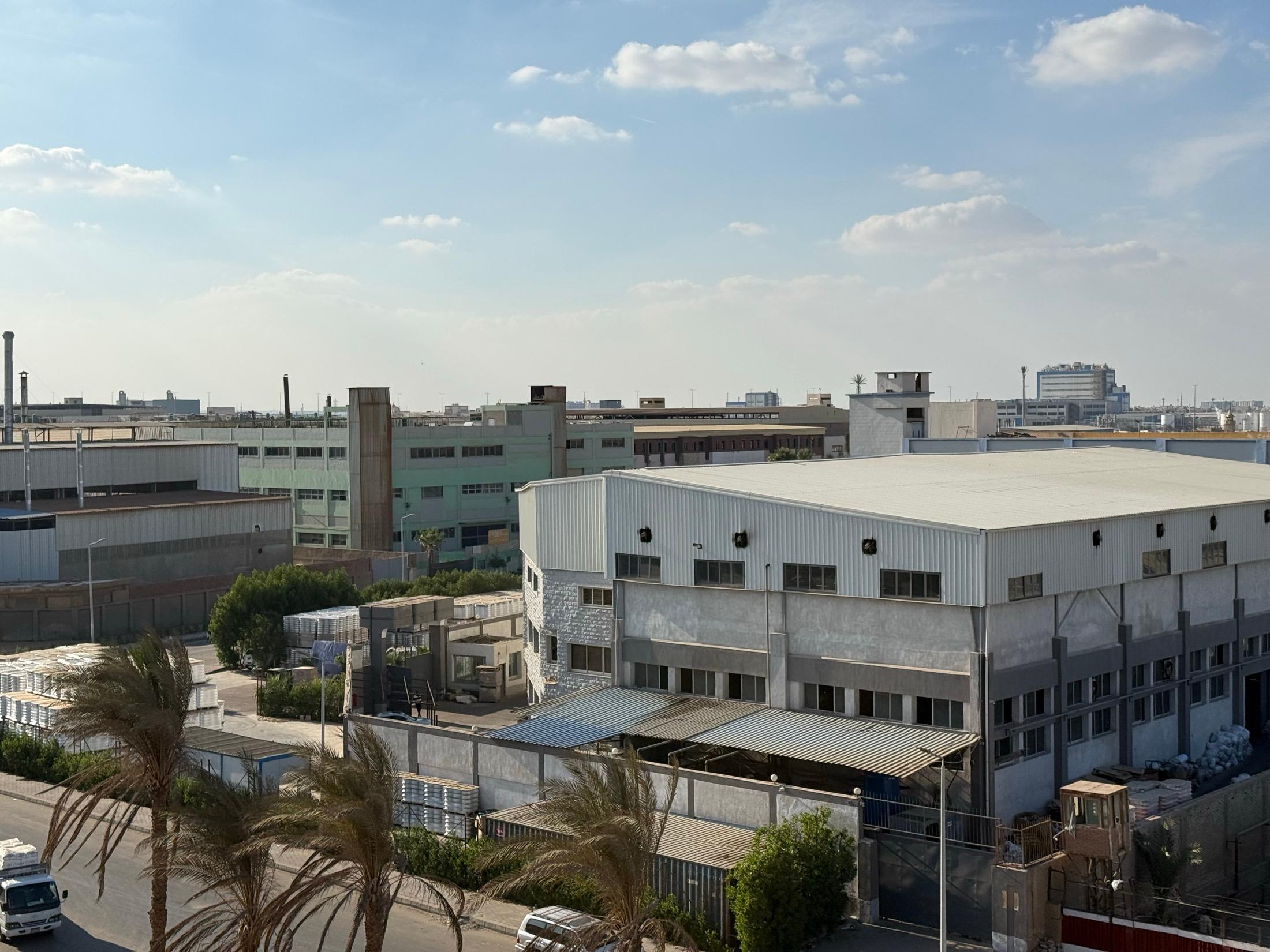
Al Rawda was established in 10th of Ramadan City in 2017, with HIMSON texturizing machines shipped from India. Our partnership with HIMSON Engineering began in 2010.
We are in A2 Industrial Zone East, and we are always glad to show visitors the yarn.
Open in Google MapsReady to choose your yarn?
See what each denier is used for, explore the range in 3D, or tell us what you are making.